AI Is Getting Smarter. Are We Getting Wiser?
Artificial intelligence expands capability. The harder question is how responsibility, accountability, and human dignity should govern that power.
Dr. Abdillah Mohamed writes at the intersection of technology, ethics, Islamic thought, and human flourishing—asking how knowledge, prosperity, and power can remain connected to purpose and responsibility.
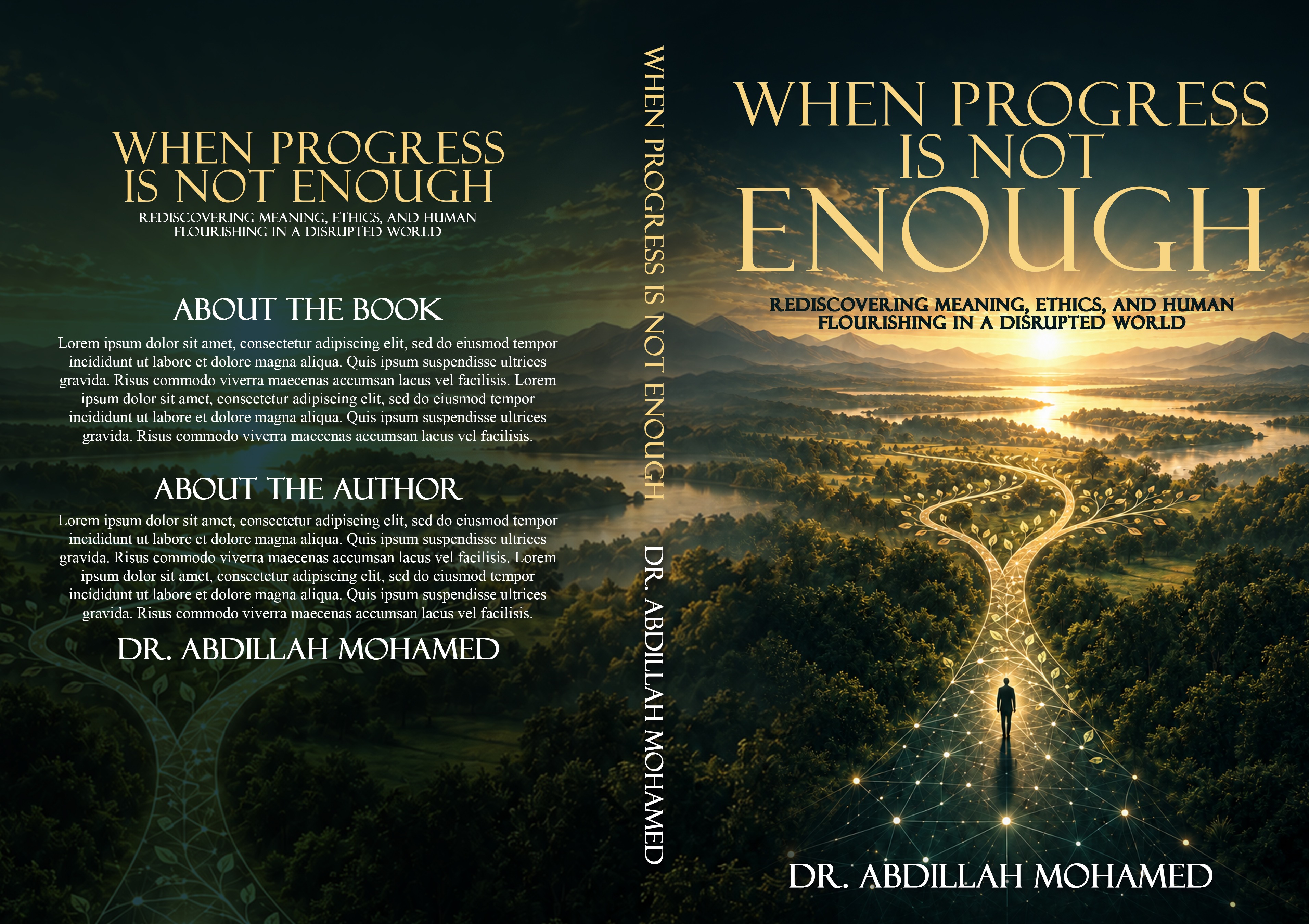
Science, medicine, digital technology, and economic development have expanded human possibility in extraordinary ways. Yet greater capability does not automatically answer questions of meaning, belonging, justice, responsibility, or human purpose.
This website is a home for writing and conversation around those questions—bringing technological experience into dialogue with ethics, Islamic thought, and contemporary research.
Meaning, spiritual orientation, attention, and the inner life.
Community, family, loneliness, trust, and mutual responsibility.
Economic life, wealth, work, finance, dignity, and fairness.
AI, cybersecurity, privacy, stewardship, and the environment.
Can technological and material progress sustain humanity without meaning, ethics, and purpose?
From mental well-being and loneliness to artificial intelligence, economic inequality, and environmental responsibility, the book explores what happens when human capability grows faster than our moral conversation about what that capability is for.
Drawing on Qur’anic principles, Prophetic teachings, Islamic ethical thought, and contemporary research, it invites Muslim and non-Muslim readers into a shared inquiry about the conditions of genuine human flourishing.
Publication information and purchase links will be added here when available.
Artificial intelligence expands capability. The harder question is how responsibility, accountability, and human dignity should govern that power.
What should technological progress ultimately serve—and how should we evaluate innovation beyond efficiency and convenience?
Exploring how enduring principles such as amanah, ‘adl, rahmah, and mizan can inform contemporary ethical questions.
“We are becoming increasingly capable of answering ‘What can we do?’—but are we equally prepared to answer ‘What should we do, and why?’”